

Predicting side effects from steroids ... and a device that detects the gas you pass
Volume 13, Issue 24 | June 25, 2026


ALSO IN THIS ISSUE
Insights from the European Society of Human Genetics
Reddit chatter + wastewater for the World Cup win
Rare disease roundup
Infectious disease updates

Insights from the European Society of Human Genetics
Steroid side-effect prediction
Oral corticosteroids are one of the most commonly prescribed classes of drugs in all of medicine. But their wide-ranging anti-inflammatory and immune-dampening capabilities come with the potential for significant side effects that include stroke, osteoporosis, and cataracts, especially when the drugs are used long-term. Since clinicians don’t know in advance whether a given patient is part of the 10% of people who will develop these problems, they often start patients on doses that are lower than the ideal for their condition - or they avoid steroids altogether, opting for more-expensive treatments that may be less effective.
Genetic testing could identify those folks in advance, according to research presented at the annual conference of the European Society for Human Genetics (ESHG) earlier this week. It showed that people with certain genes were more likely to develop certain side effects: CYP3A4 for osteoporosis and CTLA4 for stroke and cataract, for example. Using a polygenic risk score improved their prediction ability even further, especially for osteoporosis in younger people.
Comprehensive prenatal genetic testing that’s not invasive
Another abstract presented at the European Society of Human Genetics annual conference described non-invasive fetal sequencing (NIFS), a comprehensive blood-based screening test for fetal anomalies. While noninvasive genetic tests for fetuses already exist, the range of diseases each of them tests for is limited. Only invasive tests - amniocentesis and chorionic villus sampling (CVS) provide a complete picture. But many opt to avoid them.
The new NIFS technique relies on deep sequencing of the fetal exome, using cell-free fetal DNA found in maternal blood samples. Their study found 95 - 99% of the genetic variants that invasive tests discovered in the same patients, and over 97% of the genetic variants that cause clinically important conditions. It was accurate as early as 10 weeks into a pregnancy.
COMMENTARY: This technique relies on lab capabilities that already exist, so it may be much cheaper than invasive tests. Definitely a technology to watch in larger studies.
Reddit chatter + wastewater for the World Cup win
Two weeks ago, we reported on a project led by Georgetown University’s Health Security Operations Center (HSOC) and MedStar Health, a Washington, DC-area hospital chain, to monitor World Cup venues for signs of infectious-disease outbreaks. Looks like the team scored. One of the project’s partners (Project Stethoscope, led by Your Local Epidemiologist’s Katelyn Jetelina) noticed a spike in Reddit chatter about gastrointestinal illness in the Seattle area, and notified the rest of the group. Wastewater testing in the area confirmed a spike in adenovirus, which causes mild, self-limiting GI illness, particularly in kids. Fortunately, it does not seem to have impacted the games.
Rare disease roundup
Diagnosing a rare disease is the ultimate needle-in-the-haystack endeavor. Here are a few new methods that scientists hope will improve the odds of making these elusive discoveries.
A single genomic test that could replace 15 individual tests
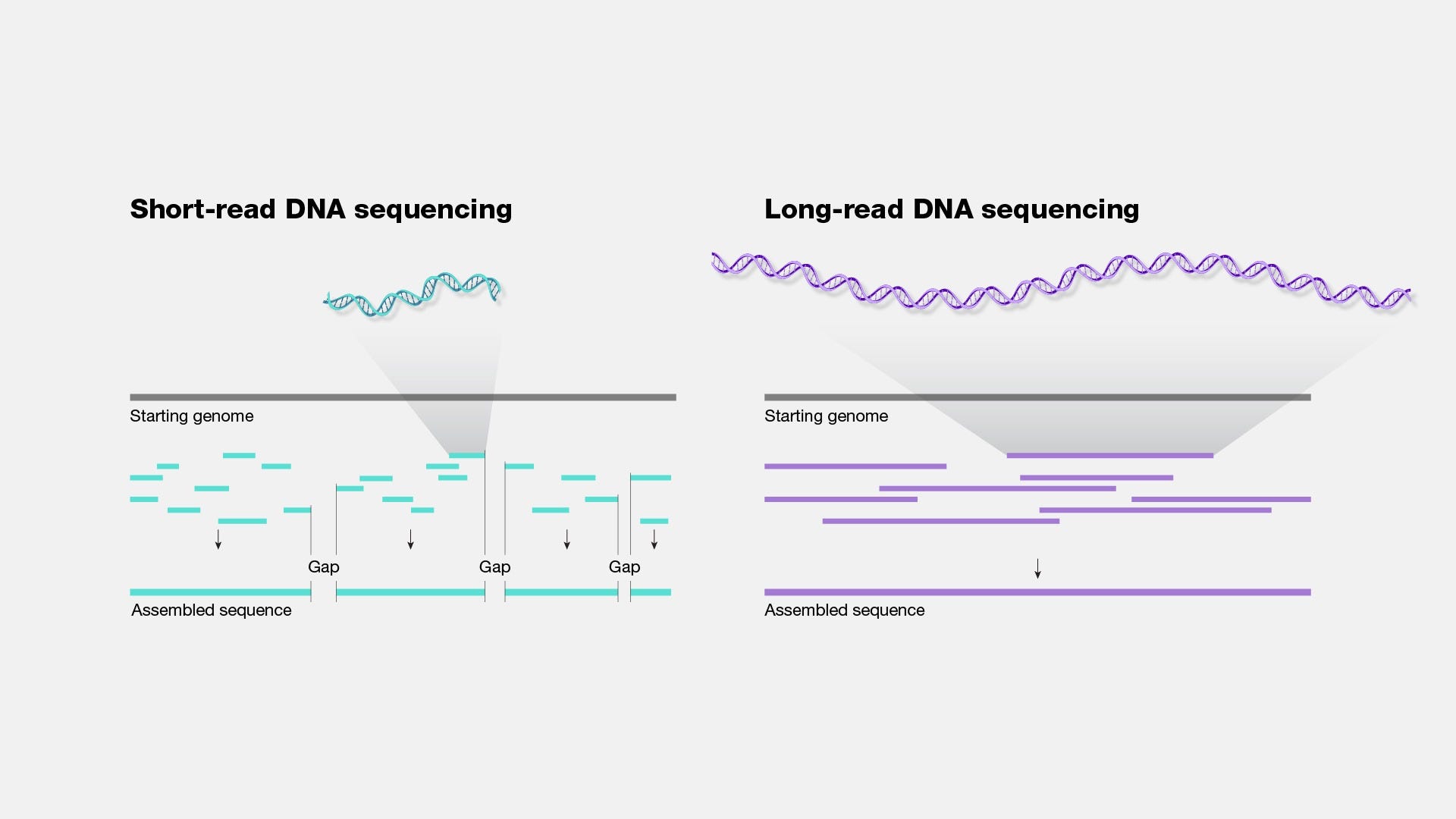
Genetic sequencing is the cornerstone of modern rare-disease diagnosis, as about 80% of these diseases have a genetic cause. Typical genetic testing relies on short-read sequencing, which looks at sections of DNA that are typically about 300 to 400 base pairs long. Long-read sequencing is a technique in which thousands of base pairs or more are sequenced all at one time. While the process is more expensive than short-read sequencing on a per-sample basis, research published in the New England Journal of Medicine showed that for diagnosing rare diseases, it’s also more effective, yielding about 3% more diagnoses (the reads for the test assessed in the paper were 20,000 base pairs long). And its higher cost may be offset by the fact that one long-read test can replace 15 short-read genomic tests.
Off-the-shelf LLM + clinician = improved diagnostic rate
And then, of course, there’s AI.
In a paper that appeared in NEJM AI last week, researchers found that an off-the-shelf large language model was able to mine genomic and other patient data to diagnose rare diseases that clinicians had been unable to identify. As NBC News reported, “the researchers provided the o3 model with clinicians’ notes about the case, a description of the patient’s symptoms, and a filtered list of certain genes that might be responsible for the patient’s symptoms.” The final diagnoses were then made by humans, and included 18 new diagnoses among 376 cases.
Listen for more
Once you’ve diagnosed a rare disease, the next question looms: Does a treatment for this disease exist? To hear former deputy FDA commissioner Janet Woodcock’s take on how the agency could change its approach to approving these treatments, tune in to this week’s episode of the On Target podcast.

Assessing the flatus each of us passes
Introducing self at a July 4th party: So, how often do you fart?
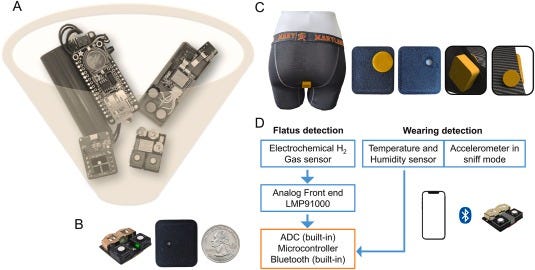
Just kidding - don’t answer that. You don’t actually know. No really, you don’t - and we know that because people have been testing it, using a new device described in a Biosensors and Bioelectrics: X article as “Smart Underwear.”
The title is kind of a misnomer, because this thing isn’t a pair of underwear you put on. It’s a little device just a smidge larger than a stack of five quarters - we checked - that snaps onto the outside of whatever underwear you want to wear it with.
The paper notes that all but one of the 19 study participants reported “no significant discomfort during routine daily activities,” and on average, participants wore the device for over 11 hours a day. You’ll also be happy to hear that the study authors decided to use silver oxide batteries “housed in custom-designed brass retainers” as a power source. (Standard lithium-ion batteries were deemed to be too much of a fire hazard!)
Why does the world need a device like this?
First of all, because you can’t know what’s abnormal unless you know what’s normal. If you’re farting (or in technical terms, “passing flatus”) 150 times a day, is that bad? If 20 is the average number for a healthy person, sure. But not if the real average is 200. (Studies to determine the answer to this question are ongoing.)
And that brings us to the second reason: People are really bad at estimating how often they fart. Until now, the only devices that could measure flatus frequency required rectal tubes. Good luck getting study participants to wear those for 11 hours a day.
The third reason is that flatus is a potential diagnostic sample. Yes! The chemical makeup of a person’s flatus depends on the makeup of their gut microbiome, which in turn changes based on what they eat. The device was able to detect changes in the hydrogen level of flatus with about 95% sensitivity. Now that’s something to celebrate, maybe with some little, um, explosions . . . or even some fireworks!

Influenza
An influenza outbreak has sickened nearly 300 people at the US Air Force’s boot camp at Lackland Air Force Base. This April, Defense Secretary Pete Hegseth made flu shots optional for incoming military recruits - and according to the Associated Press, only about 40% of recruits who arrived at the Lackland base after the change chose to get vaccinated. On Wednesday, the Defense Department announced that the flu vaccine will once again be mandatory for all recruits.
Measles
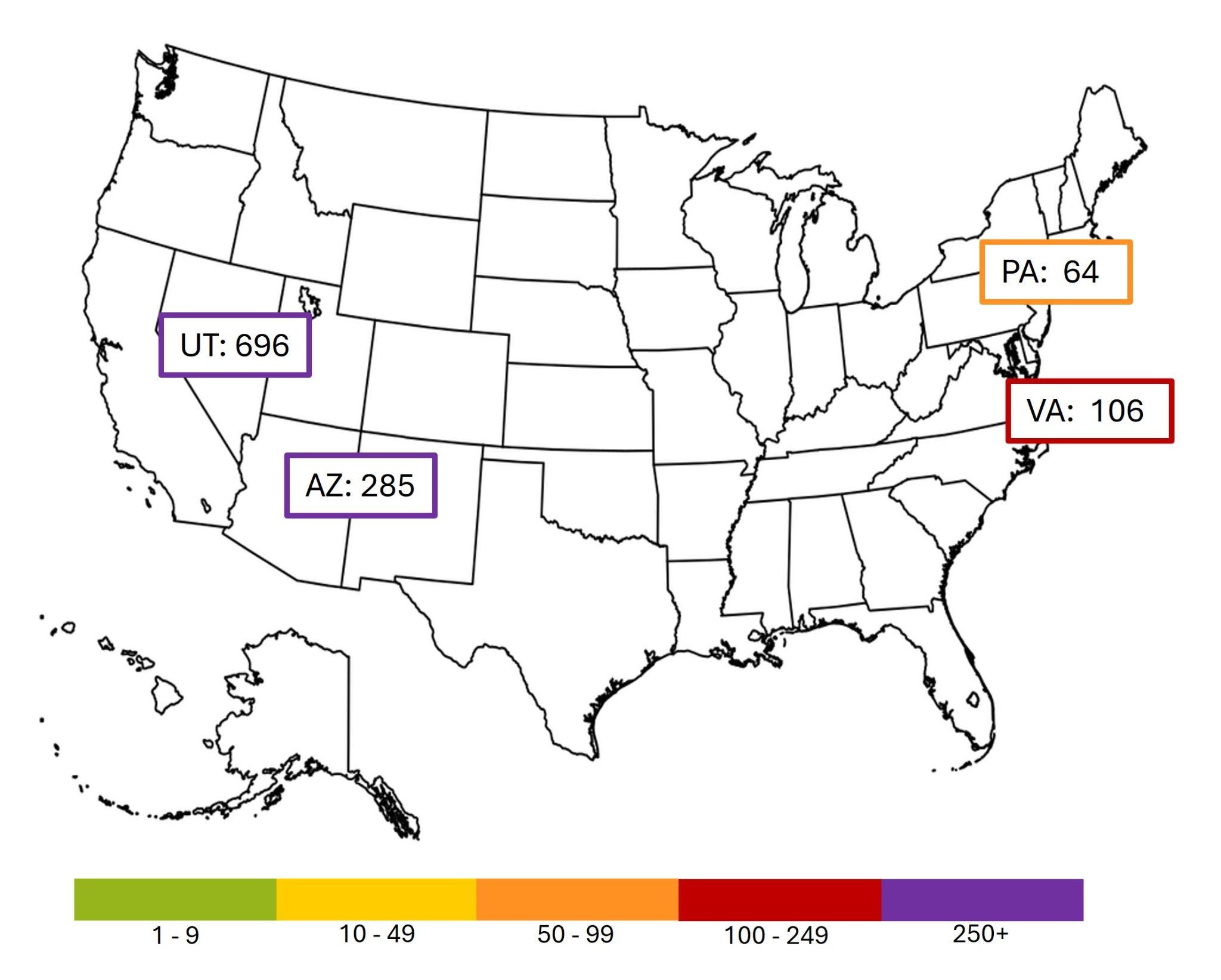
The Utah measles outbreak has now been going on for more than a year - according to Medpage Today, the first case was reported on June 20, 2025.
The current larger outbreaks in the US are shown below: Arizona / Utah, Pennsylvania (one outbreak in Lancaster county and one in Lebanon county), Virginia, Washington.
🎙️ New Episode Alert:
Janet Woodcock, distinguished FDA veteran and past deputy commissioner of the agency, gives us her take on AI, companion diagnostics, drugs for rare diseases, and how to earn trust for new technology.
Listen in: ontargetpodcast.com
Join the conversation: If you’re leading innovation in this space and want to share your perspective, we want to hear from you. info@ontargetpodcast.com
Note: We will be off next week for the Fourth of July. We hope that you have a safe, relaxing, and enjoyable holiday weekend. We will be back on July 9th.